Federal Workers Compensation Doctors and Long-Term Recovery in Henderson
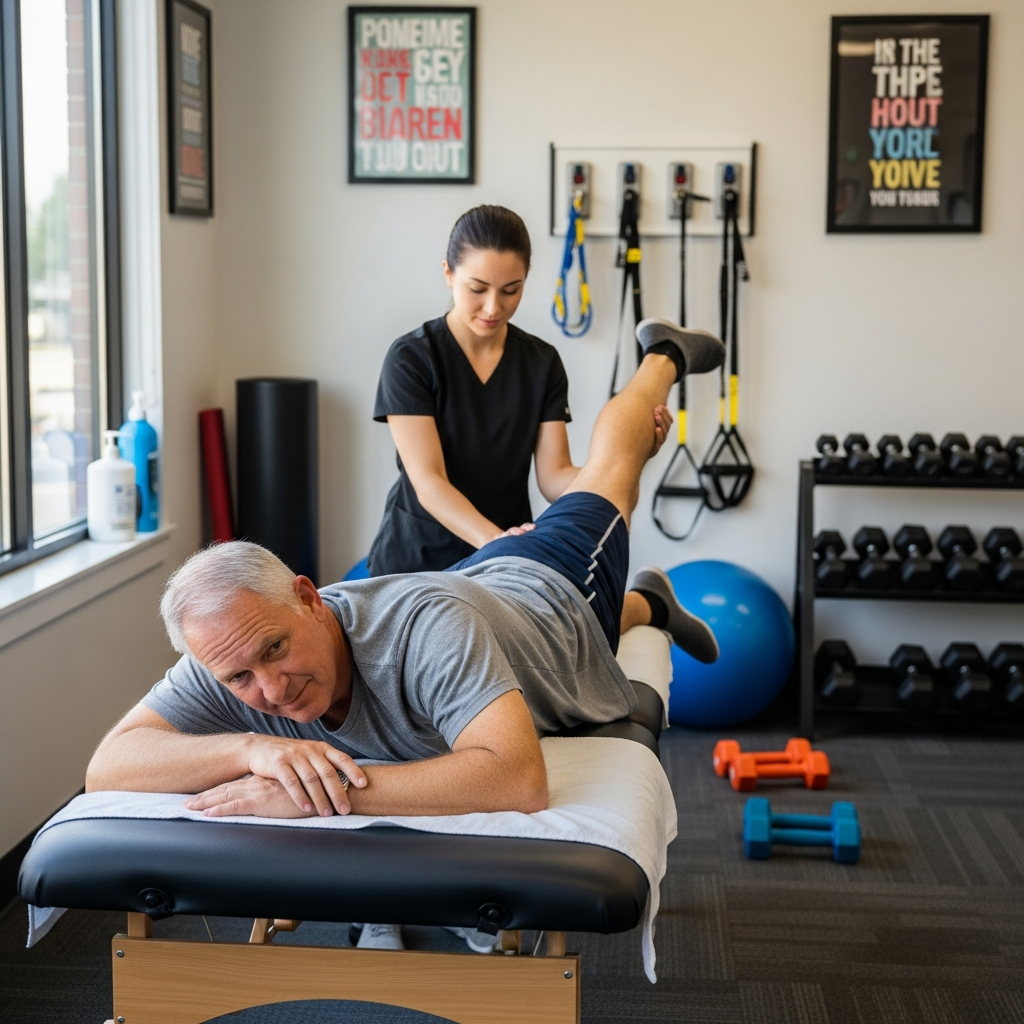
You know that moment when you’re scrolling through your phone at 2 AM, unable to sleep because your back is screaming from that workplace injury three months ago? Your mind’s racing with questions you can’t answer: Will this ever actually get better? Is my doctor really helping, or just going through the motions? And honestly… am I ever going to feel like myself again?
If you’re a federal worker in Henderson dealing with a work-related injury, you’ve probably had this exact experience. Maybe you’re sitting there right now, ice pack on your shoulder, wondering if the treatment you’re getting through workers’ compensation is actually moving the needle – or if you’re just stuck in some endless cycle of appointments that don’t seem to lead anywhere meaningful.
Here’s what nobody tells you about federal workers’ comp: finding the right doctor isn’t just about treating your immediate injury. It’s about finding someone who gets the bigger picture – someone who understands that you don’t just want to “manage” your pain or mobility issues forever. You want your life back.
The thing is, Henderson has this interesting position in the federal workers’ compensation world. We’ve got federal employees from Nellis Air Force Base, the Department of Energy, Border Patrol, postal workers… the list goes on. These aren’t desk jobs where the biggest risk is a paper cut. We’re talking about people who’ve injured their backs lifting heavy equipment, torn rotator cuffs in maintenance work, developed repetitive strain injuries from years of data entry, or worse.
And yet – and this might sound familiar – many federal workers find themselves bouncing between doctors who treat them like just another case file. You know the type: they spend three minutes looking at your chart, prescribe another round of physical therapy that isn’t really working, and send you on your way. Meanwhile, you’re still waking up in pain, still worried about your job security, still wondering if this is just… it for you.
That’s where the concept of long-term recovery comes in, and honestly? It’s a game-changer when you find the right approach.
Long-term recovery isn’t about learning to live with limitations – though some doctors might make you think that’s your only option. It’s about understanding that healing from a workplace injury involves your whole person, not just the body part that got hurt. It’s recognizing that going back to work successfully (and safely) requires a comprehensive plan that accounts for your specific job demands, your personal health history, and yes, even your mental health through all of this.
Because let’s be real for a second – dealing with a workers’ comp claim is stressful enough without adding a doctor who doesn’t seem invested in your actual recovery.
The federal workers’ compensation system has its quirks, too. There are specific procedures, paperwork requirements, and approval processes that can make your head spin. Some doctors in Henderson specialize in navigating these waters, while others… well, they’re learning as they go. And when you’re the patient, you definitely don’t want to be someone’s learning experience.
Throughout this article, we’re going to explore what makes certain doctors particularly effective for federal workers’ compensation cases in Henderson. We’ll talk about the red flags that might indicate you’re not getting the care you deserve, and more importantly, the green flags that suggest you’ve found someone who’s genuinely committed to your long-term recovery.
You’ll discover why some treatment approaches work better than others for federal employees (hint: it’s not just about the injury itself), and we’ll walk through what a truly comprehensive recovery plan looks like. We’ll also address some of those 2 AM worries – like whether switching doctors will mess up your claim, or how to advocate for yourself when you feel like you’re not being heard.
Most importantly, we’ll help you understand that feeling frustrated with your current treatment isn’t being “difficult” or “impatient.” Sometimes it’s your instincts telling you that you deserve better care – and you’re absolutely right.
Your recovery matters. Your quality of life matters. And finding the right medical support can make all the difference between feeling stuck and actually getting your life back.
What Makes Federal Workers Comp Different (And Why It Matters)
You know how regular health insurance feels like navigating a maze blindfolded? Well, federal workers’ compensation is like that maze… but with different rules, different exits, and honestly – sometimes better outcomes if you know which doors to open.
Here’s the thing that catches most people off guard: when you’re a federal employee and you get injured on the job, you’re not dealing with your regular doctor anymore. You’re entering what’s essentially a parallel healthcare universe called the Federal Employees’ Compensation Act (FECA). It’s run by the Department of Labor’s Office of Workers’ Compensation Programs, and frankly, it can feel like learning a new language.
Think of it this way – if regular healthcare is like shopping at your neighborhood grocery store where you know all the aisles, FECA is like suddenly finding yourself in a specialty warehouse where everything’s organized differently, but once you figure it out, you might actually get better products.
The Doctor Selection Dance
Now here’s where it gets interesting (and a bit frustrating, let’s be honest). Unlike your typical health insurance where you can usually pick any doctor in your network, FECA has this thing about approved physicians. You can’t just waltz into any clinic and expect coverage.
Initially, you get to choose your own doctor – that’s the good news. But here’s the catch that nobody really explains upfront: the Department of Labor can require you to see their choice of physician for what they call a “second opinion.” And if there’s a disagreement between your doctor and theirs? They bring in a third doctor to break the tie. It’s like medical rock-paper-scissors, except the stakes are your health and your paycheck.
This is where having the right doctor from the start becomes absolutely crucial. You want someone who speaks fluent FECA – not just medically competent, but someone who understands the paperwork maze, the specific reporting requirements, and how to document your case in a way that actually gets results.
Long-Term Recovery: It’s Not Just About Getting Better
Here’s something that might sound backwards at first: with FECA, getting “better” doesn’t necessarily mean your case is closed. Actually, that reminds me of something important – federal workers’ comp is designed for the long haul in ways that regular insurance often isn’t.
Let’s say you’re dealing with a back injury that’s going to need ongoing management for years. With regular insurance, you might hit annual caps, fight for approval for each treatment, or face pressure to rush back to work. FECA? It’s more like having a medical trust fund specifically for your work-related condition. No annual limits, no lifetime caps, and if you need ongoing care… well, that’s what the system is built for.
But – and this is a big but – you need doctors who understand how to work within this system. A physician who’s great at treating your condition but doesn’t know how to properly document functional limitations or communicate with FECA examiners? That’s like having a brilliant chef who doesn’t know how to use your kitchen equipment.
The Henderson Advantage (Yes, Location Actually Matters)
You might wonder why Henderson specifically matters in this equation. Here’s the reality: not every city has a deep bench of FECA-experienced physicians. Henderson sits in this sweet spot where you’ve got access to Las Vegas’s larger medical community, but you’re also in a region where federal employment is significant enough that doctors actually know their way around workers’ comp cases.
It’s sort of like how some mechanics specialize in European cars while others focus on trucks. You want the mechanic who’s seen your specific problem a hundred times before, not someone who’s figuring it out as they go.
The Documentation Game (Sorry, But It’s Important)
Look, nobody likes paperwork. But with FECA cases, documentation isn’t just bureaucratic busy work – it’s literally the foundation of your entire case. Your doctor needs to understand that every report, every treatment note, every functional assessment becomes part of a permanent record that could affect your benefits for decades.
Think of it like building a legal case, except instead of proving guilt or innocence, you’re proving the ongoing impact of your work-related injury. Miss key details early on? You might spend years trying to fill in those gaps later.
The good news is that when you find doctors who really understand this system, they handle most of this complexity behind the scenes. You focus on getting better; they focus on making sure the system works for you instead of against you.
Finding the Right Doctor Who Actually Gets Workers’ Comp
Here’s what nobody tells you – not every doctor wants to deal with federal workers’ compensation cases. The paperwork? Intense. The approval processes? Lengthy. You’ll save yourself months of frustration by asking upfront: “Do you have experience with OWCP cases?”
The doctors who do this well… they’ve got systems in place. They know which forms to fill out (and when), they understand the difference between a CA-1 and CA-2, and – this is huge – they won’t make you wait three weeks for a simple work status report.
Start with your agency’s list of approved providers, sure, but don’t stop there. Call around and ask about their experience with federal workers specifically. The receptionist’s response will tell you everything. If they pause and say “um, let me check,” keep looking.
Getting Your Documentation Game Right From Day One
Your medical records are going to be scrutinized like a tax audit. Every visit, every treatment recommendation, every missed appointment – it all matters for your case.
Come prepared to each appointment with a written list of your symptoms. I’m talking specifics: “Pain level 7/10 when lifting more than 10 pounds, shooting pain down left leg after sitting for 30 minutes.” Vague descriptions like “it hurts” won’t cut it when OWCP is deciding whether to approve your physical therapy.
Actually, let me share something most people don’t think about… bring a small notebook and jot down what the doctor says during your visit. Not because you don’t trust them, but because when you’re dealing with pain or stress, details get fuzzy. Plus, if there’s ever a discrepancy between what was discussed and what ends up in your file, you’ll have your own record.
Advocating for Comprehensive Treatment Plans
Here’s where you need to be a little pushier than you might feel comfortable being. Federal workers’ comp can cover a lot more than people realize – physical therapy, occupational therapy, pain management, even psychological counseling if your injury has affected your mental health.
Don’t let your doctor just prescribe pain medication and send you on your way. Ask about additional treatments: “Would physical therapy help my recovery?” “Should we consider an MRI to get a clearer picture?” “What about ergonomic evaluation for when I return to work?”
The key phrase to use? “Doctor, what treatment options would give me the best chance at full recovery?” Frame it around getting back to work – that’s language OWCP understands and supports.
Navigating the Approval Process Like a Pro
Your doctor submits treatment recommendations, but OWCP makes the final call on what gets approved. This dance can take weeks… or months if you’re not careful.
Stay on top of your case status. The OWCP website has a portal where you can track your claim, but honestly? It’s not always updated promptly. Call your claims examiner directly – yes, they have phone numbers, and yes, they’re supposed to talk to you. Be polite but persistent.
When OWCP requests additional information (and they will), respond immediately. I’ve seen cases delayed for months because someone took their time getting back with requested medical records or doctor reports.
Making the Return-to-Work Transition Smooth
This is where a lot of people stumble – and it’s completely avoidable with the right preparation.
Start talking about return-to-work logistics with your doctor early, not when you’re suddenly feeling better. What accommodations might you need? Modified duties? Ergonomic equipment? Your doctor needs to document these recommendations before you head back, not after you’ve aggravated your injury again.
Get everything in writing. If your doctor says you can return to work with restrictions, make sure those restrictions are crystal clear on your medical reports. “Light duty” doesn’t mean much – “no lifting over 20 pounds, alternate between sitting and standing every hour” gives your supervisor actual guidance.
Building Your Support Network
Recovery isn’t just medical – it’s logistical, emotional, and sometimes financial. Connect with other federal employees who’ve been through similar situations. Your union representative can be invaluable here, especially if you run into roadblocks with OWCP.
Consider reaching out to an OWCP attorney if your case gets complicated. Many work on contingency, and they know the system inside and out. Sometimes just having someone who speaks “workers’ comp fluent” can speed things up dramatically.
Remember, your goal isn’t just to get through this process – it’s to come out the other side as healthy and functional as possible. The right medical team, combined with smart advocacy on your part, makes all the difference.
When Your Body Doesn’t Bounce Back Like It Used To
You know what nobody tells you about federal workers’ comp recovery? That it’s not just about healing from your injury – it’s about navigating a system that sometimes feels like it’s designed to exhaust you into giving up.
Take Sarah, a postal worker who hurt her back lifting packages. Three months into her claim, she’s dealing with more than just lingering pain. She’s got appointment scheduling nightmares, insurance pre-authorization delays, and doctors who seem to spend more time documenting than actually listening to what hurts. Sound familiar?
The biggest challenge isn’t usually the injury itself – it’s everything else that comes with it.
The Documentation Dance (And Why It Matters More Than You Think)
Here’s something that’ll save you headaches down the road: every conversation, every missed appointment, every treatment change needs to be documented. I’ve seen too many federal employees lose benefits simply because they couldn’t prove a treatment was work-related or medically necessary.
Start a simple log – nothing fancy. Date, time, who you talked to, what was discussed. When your adjuster calls and says they never received your doctor’s report? You’ll have proof you discussed it on Tuesday at 2:15 PM.
Actually, that reminds me of a trick one of our patients shared… She started sending follow-up emails after every phone call: “Just to confirm our conversation today about my physical therapy authorization…” Suddenly, things stopped getting “lost” in the system.
Finding the Right Doctor (It’s Like Dating, But More Frustrating)
Not every doctor understands workers’ compensation cases. Some are brilliant with medical treatment but terrible with the paperwork maze that federal claims require. Others are great at documentation but might not have experience with your specific injury.
You need someone who gets both sides of the equation. Look for doctors who
– Actually return OWCP forms promptly (you’d be surprised how many don’t) – Understand work restrictions and can write them clearly – Won’t disappear when insurance questions their treatment recommendations
Don’t be afraid to ask potential doctors directly: “How comfortable are you with federal workers’ compensation cases?” Their answer – and more importantly, how they answer – will tell you everything you need to know.
When Progress Feels Impossible
Three months in, you’re still hurting. Six months later… same story. Your family’s starting to give you those looks, and honestly? You’re starting to wonder if you’re losing your mind.
This is where recovery gets mentally brutal. Your body’s healing on its own timeline, but the system expects linear progress. Real talk – sometimes healing looks like two steps forward, three steps back, then suddenly a leap ahead when you least expect it.
The solution isn’t to push through pain (please don’t), but to redefine what progress looks like. Maybe today you can sit for 20 minutes instead of 15. Maybe you slept through the night without waking up in pain. These aren’t small victories – they’re the building blocks of real recovery.
The Money Stress Nobody Talks About
Workers’ comp pays a percentage of your salary, not your full pay. Meanwhile, medical bills keep coming, and that car payment doesn’t care about your injury status. Financial stress can actually slow healing – your body can’t relax when your mind is constantly worried about bills.
Be proactive here. Contact your mortgage company, credit card companies, anyone you owe money to. Explain the situation before you miss payments. Most have hardship programs, but they work better when you call them first, not after you’re already behind.
And here’s something most people don’t know: you might qualify for temporary disability benefits through Social Security while your workers’ comp case is pending. It’s not automatic, but it’s worth exploring.
Building Your Support Network (Because Going Solo Is Overrated)
Recovery happens faster when you’re not doing it alone. I don’t mean just family support – though that’s crucial. I mean finding other federal employees who’ve been through similar situations.
Online forums, support groups through your union, even casual conversations with coworkers who’ve navigated workers’ comp… these connections are goldmines of practical advice. Who else is going to tell you which OWCP office actually answers their phone, or which physical therapy clinic doesn’t make you wait three weeks for an appointment?
The system is complicated, but it’s not impossible. You just need the right information, realistic expectations, and honestly? A little bit of stubborn determination doesn’t hurt either.
Setting Realistic Expectations for Your Recovery Timeline
Let’s be honest here – you’ve probably been dealing with your injury longer than you’d like, and you’re wondering when things will finally get better. The truth is, recovery through the Federal Workers’ Compensation system doesn’t happen overnight, and anyone who tells you otherwise isn’t being straight with you.
Most patients see their Henderson OWCP doctor every 4-6 weeks initially, sometimes more frequently if you’re dealing with something acute like a recent surgery or a significant flare-up. But here’s what nobody really prepares you for… the paperwork shuffle between appointments can feel endless. Your doctor submits reports, OWCP reviews them (which can take weeks), and then decisions get made about your treatment plan. It’s frustrating, I know.
The good news? Once you find the right doctor who understands the federal system – and there are excellent ones in Henderson – things tend to move more smoothly. You’re not starting from scratch every visit, explaining your whole history again. They get it. They know how to navigate the system efficiently.
What “Normal” Progress Actually Looks Like
Recovery isn’t a straight line up, despite what those motivational posters suggest. You’ll have good days and setbacks – sometimes in the same week. That’s completely normal, though it doesn’t make it any less maddening when you’re living through it.
For most federal employees dealing with chronic conditions or significant injuries, meaningful improvement often takes 3-6 months of consistent treatment. I’m talking about the kind of progress where you actually notice a difference in your daily life – not just what shows up on a medical chart.
Some weeks you might feel like you’re back to square one. Your back might seize up after a good stretch of feeling better, or that shoulder might start acting up again just when you thought you’d turned a corner. This doesn’t mean your treatment isn’t working. It means you’re human, and healing takes time.
Working Within the Federal System’s Rhythm
Here’s something that might help manage your expectations – the OWCP system has its own pace, and fighting against it usually just adds stress to your life. Your Henderson doctor will need to request approval for certain treatments, especially things like extended physical therapy or specialized procedures. This process typically takes 2-3 weeks, sometimes longer during busy periods.
What you can do is stay on top of your appointments and follow-through. Show up consistently (I know, easier said than done when you’re in pain), do the exercises they give you at home, and communicate openly about what’s working and what isn’t. The doctors who work with federal employees see a lot of cases, and they can spot when someone’s truly engaged in their recovery versus just going through the motions.
Building Your Support Network
Recovery isn’t just about the medical stuff – though that’s obviously crucial. You’ll probably need to make some adjustments at work, maybe modify how you do certain tasks or arrange for ergonomic equipment. Your Henderson OWCP doctor can help with those recommendations, but it might take several iterations to get the workplace modifications just right.
Don’t be surprised if family members or friends don’t quite understand the timeline you’re dealing with. They mean well when they ask, “Aren’t you better yet?” but chronic work injuries don’t operate on the same schedule as a cold or a broken bone that heals in six weeks.
Your Next Steps Forward
Start by making sure you’ve got all your ducks in a row – contact information for your case worker, copies of important medical reports, and a clear understanding of which treatments have been approved. If you don’t have a Henderson OWCP doctor yet, or if you’re not happy with your current one, now’s the time to make that change.
Keep a simple log of your symptoms and how treatments are affecting you. Nothing fancy – just notes on your phone or a small notebook. This information becomes invaluable during appointments and helps your doctor adjust your treatment plan based on real-world results, not just how you’re feeling in that exact moment during a 15-minute office visit.
Remember, you’re not just trying to get back to where you were before your injury. You’re working toward a sustainable way of managing your health while staying productive in your federal career. That’s a worthy goal, and it’s absolutely achievable with the right medical team and realistic expectations about the timeline.
You know what? After talking through all of this, I hope you’re feeling a bit more hopeful about your path forward. Because here’s the thing – finding the right federal workers compensation doctor in Henderson isn’t just about checking boxes on a form or jumping through bureaucratic hoops. It’s about finding someone who truly gets what you’re going through.
Your Recovery Deserves the Right Partnership
When you’re dealing with a work-related injury, you’re not just managing physical pain. There’s the stress of paperwork, the worry about job security, the frustration of feeling like just another case number… it’s a lot. That’s exactly why having a doctor who understands the OWCP system – really understands it – makes such a difference.
Think of it like having a translator when you’re in a foreign country. Sure, you might eventually figure out how to ask for directions, but wouldn’t you rather have someone who speaks the language fluently? Someone who can navigate the cultural nuances and help you avoid the common pitfalls?
The doctors we’ve discussed aren’t just treating your symptoms – they’re advocating for your long-term wellbeing. They know which diagnostic tests OWCP typically approves, how to document your progress in ways that support your claim, and most importantly, how to design treatment plans that actually work for federal employees’ unique situations.
You’re Not Alone in This
I’ve seen too many federal workers try to tough it out alone, thinking they should just accept whatever treatment gets approved without question. But here’s what I want you to remember: you have options. You have rights. And you absolutely deserve care that addresses not just your immediate injury, but your long-term health and quality of life.
Your recovery timeline isn’t a race. Some days will be better than others – that’s completely normal. What matters is that you’re working with medical professionals who understand that healing isn’t linear, especially when you’re managing both your health and the complexities of federal workers compensation.
Taking That Next Step Forward
If you’ve been struggling to find the right care, or if you’re feeling overwhelmed by the whole process… honestly, that makes total sense. This stuff is complicated, and you shouldn’t have to figure it out on your own.
We’re here to help make this easier for you. Our team works specifically with federal employees in Henderson, and we understand both the medical side and the administrative maze you’re dealing with. We can help connect you with the right specialists, support you through the documentation process, and most importantly – focus on getting you back to feeling like yourself again.
Give us a call when you’re ready. No pressure, no sales pitch – just real people who want to help you get the care you deserve. Because your health matters, your recovery matters, and you matter. Sometimes we all need someone in our corner who knows the system inside and out.
You’ve got this. And when you’re ready for some backup, we’ve got you.