How Federal Work Comp Experts Assist With Appeals in Las Vegas
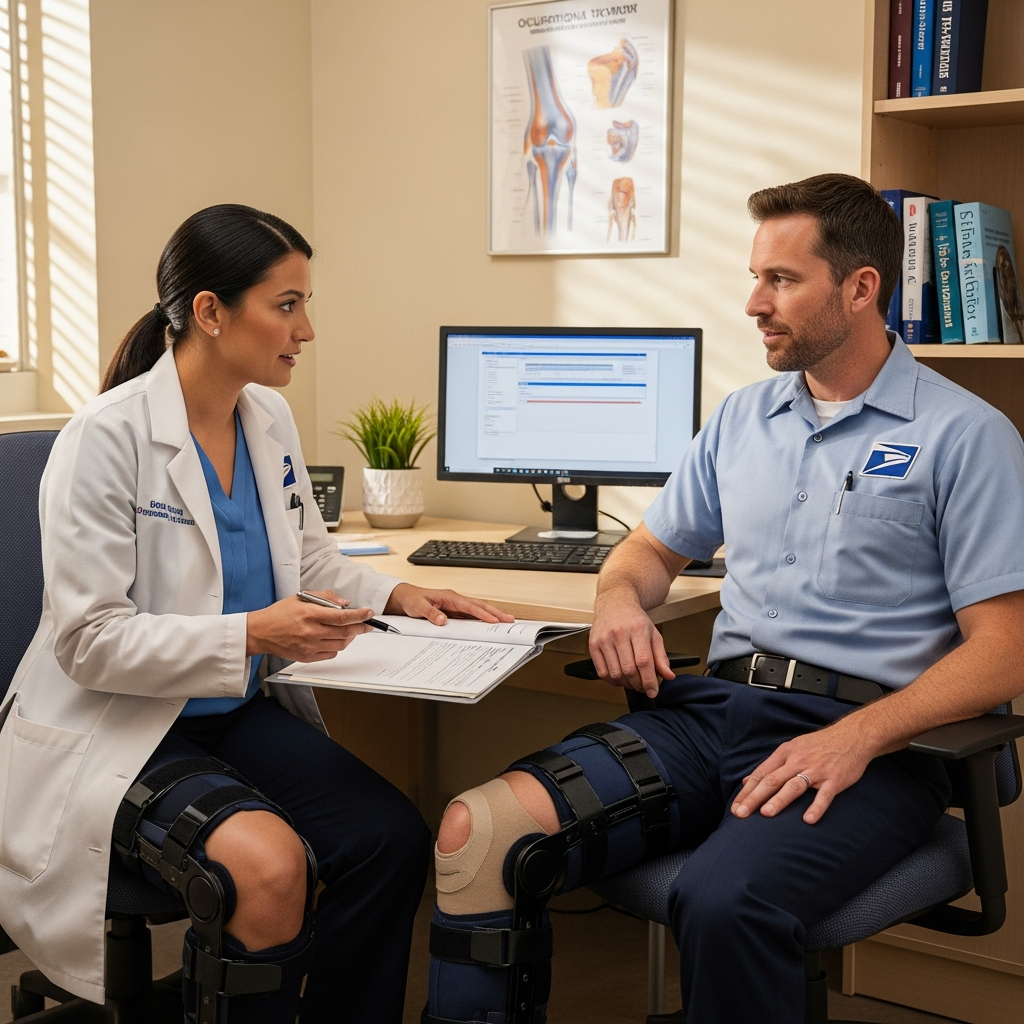
Picture this: You’ve been hurt on the job. Maybe it’s a back injury from years of lifting, or something that happened in an instant – a fall, a collision, an accident that changed everything in a split second. You did everything right. You reported it. You saw the doctors. You filled out the paperwork (all that paperwork…). And then you waited.
And then the letter came.
Denied.
That single word sitting there on official letterhead, dressed up in legal language that somehow makes a devastating decision feel even colder. Your claim has been denied, or maybe it was approved but the benefits they’re offering look nothing like what you actually need. You’re thinking – this can’t be right. I was hurt at work. This is what workers’ comp *exists* for. How is this happening?
If you work for a federal agency here in Las Vegas – whether that’s the VA, the postal service, a federal courthouse, a military installation, or any of the dozens of federal employers operating in this city – you’re not dealing with Nevada’s state workers’ comp system. You’re navigating a completely different world. Federal workers’ compensation runs through the Office of Workers’ Compensation Programs (OWCP), and honestly? It operates by its own rules, its own timelines, its own language. It’s less like a safety net and more like… a maze designed by someone who really loves bureaucracy.
And when your claim gets denied inside that maze, finding your way to an appeal can feel impossible.
Here’s what a lot of federal workers in Las Vegas don’t realize, though. A denial isn’t the end. Not even close. The appeals process within the federal system has multiple layers – multiple opportunities to fight back, present new evidence, and get the outcome you actually deserve. But – and this is a big but – those opportunities come with strict deadlines, specific procedures, and technical requirements that can trip you up badly if you don’t know what you’re doing.
That’s exactly where federal work comp experts come in.
These aren’t just general attorneys or claims adjusters who handle the occasional workers’ comp case. Federal work comp specialists live inside this system. They understand the Employees’ Compensation Appeals Board (ECAB), they know how to build a reconsideration request that actually moves the needle, and they’re familiar with the specific medical and vocational evidence standards that OWCP uses to make decisions. They know the difference between a weak appeal and one that stands a real chance – and they know how to close that gap.
Las Vegas has a unique working population. We’ve got a massive hospitality industry, sure, but there’s also a significant and sometimes overlooked community of federal workers here. Postal employees who’ve developed repetitive stress injuries. VA hospital staff dealing with workplace incidents. TSA officers, federal law enforcement, civilian contractors working on federal installations. These workers often feel isolated when they hit a brick wall with their claims, because the people around them – neighbors, family, even some local attorneys – are more familiar with state workers’ comp than federal. The advice they get, however well-meaning, sometimes points them in completely the wrong direction.
So that’s what we’re going to dig into today. You’ll get a clear picture of how the federal workers’ comp appeals process actually works (without the legal jargon headache), what federal work comp experts specifically bring to the table when you’re fighting a denied or underpaid claim, and why having the right specialist in your corner in Las Vegas can genuinely change the outcome.
Whether you just received a denial letter and you’re not sure what your next move is, or you’ve been stuck in appeals limbo for months feeling like nobody’s listening – this is for you. The system feels designed to wear you down. To make you accept a bad decision because challenging it seems too complicated, too expensive, too exhausting.
But here’s the truth: federal workers who pursue appeals with the right support win those appeals at meaningful rates. That matters. *You* matter. And the work you did – the work that got you hurt – matters too.
You have options. Let’s talk about them.
Why the Appeals Process Feels Like a Different Game Entirely
If you’ve already been through the initial workers’ compensation claim process, you might think the appeals stage is just… more of the same. It really isn’t. Think of it like this – if filing your original claim was a neighborhood pickup basketball game, an appeal is suddenly the playoffs. Different rules, higher stakes, and the other team definitely brought their best players.
In Nevada, workers’ comp appeals go through a specific administrative and legal structure that catches a lot of injured workers off guard. After a claim denial or disputed decision, the first stop is typically an Appeals Officer hearing through the Department of Administration’s Hearings Division. If that doesn’t resolve things in your favor, you can escalate to the District Court level – and beyond that, potentially to the Nevada Supreme Court. Each layer has its own procedures, deadlines, and requirements. Miss a step? You might lose rights you didn’t even know you had.
What Federal Work Comp Experts Actually Do
Here’s where people get confused – and honestly, the terminology doesn’t help. “Federal work comp experts” in the Las Vegas context typically refers to specialists who handle federal employee workers’ compensation claims under the Federal Employees’ Compensation Act (FECA), administered by the U.S. Department of Labor’s Office of Workers’ Compensation Programs (OWCP). This is completely separate from Nevada’s state workers’ comp system.
So if you’re a postal worker, a federal court employee, someone who works for a VA hospital, or any other federal government position – you’re operating under an entirely different set of rules than a private sector employee in Las Vegas would be. Same city, completely different universe when something goes wrong on the job.
FECA experts understand that universe. They know the OWCP’s often frustrating bureaucracy, they know how medical evidence needs to be structured and presented, and – maybe most importantly – they know how to frame an appeal in a way that actually gets reviewed seriously rather than rubber-stamped for denial.
The Counterintuitive Part About Appeals
Here’s something that trips people up constantly. The appeals process isn’t really about re-arguing what happened to you. It’s not about telling your story again and hoping someone finally listens. Appeals are largely about demonstrating that a legal or procedural error occurred – or presenting substantial new medical evidence that changes the picture.
It’s a bit like challenging a referee’s call in a sport. You’re not relitigating the whole game. You’re pointing to a specific moment and saying “that call was wrong, and here’s the rule that proves it.”
This is why having an expert matters so much at this stage. An experienced federal work comp specialist can look at a denial letter – which, by the way, can be genuinely difficult to parse even if you read it three times – and identify whether the OWCP applied the wrong legal standard, failed to consider relevant medical documentation, or made procedural errors that undermine their decision. Most people reading that same letter just feel defeated.
The Evidence Question (This Is Big)
Medical evidence is the backbone of virtually every successful workers’ comp appeal. And not just any medical evidence – the right kind, framed the right way. The OWCP has specific requirements for how a physician needs to document a work-related injury or illness, including what’s called a “rationalized medical opinion” that connects your condition directly to your federal employment duties.
A doctor could write a thorough, well-intentioned letter supporting your claim, and it can still fall flat if it doesn’t address the specific causation language the OWCP is looking for. It’s one of those maddening bureaucratic realities. The medicine might be solid, but the paperwork doesn’t speak the right dialect.
Federal work comp experts know this dialect. They can work with your treating physicians to ensure that supporting documentation actually holds up when it’s reviewed – not because they’re coaching anyone to say anything untrue, but because format and specificity genuinely matter in these determinations.
Deadlines Are Merciless
One more fundamental you need to understand: the OWCP appeals timeline is unforgiving. You generally have 30 days to appeal a formal decision, and there are different windows for different types of reconsideration requests. These aren’t soft suggestions. Missing a deadline can mean starting over entirely – or losing your right to appeal altogether.
In a city as busy and overwhelming as Las Vegas, with an injured worker trying to manage pain, medical appointments, and lost income simultaneously… those deadlines can sneak up fast.
Before You File Anything, Get the Denial Letter in Your Hands
Seriously – don’t take another step until you’ve read that denial letter word for word. Federal work comp denials aren’t generic form letters. They’re specific. The Office of Workers’ Compensation Programs (OWCP) tells you *exactly* why they denied your claim, and that reason is the roadmap for your entire appeal strategy. Was it “insufficient medical evidence”? Did they dispute that your injury happened in the course of employment? Those two scenarios require completely different responses, and a federal work comp expert in Las Vegas knows the difference immediately.
Read the letter, then call your expert. In that order.
Know Your Deadline Like It’s Your Social Security Number
The federal appeals process is not forgiving about timing. Under the Federal Employees’ Compensation Act (FECA), you typically have one year to appeal a formal decision – but certain procedural steps have much shorter windows. Some reconsideration requests need to be filed within 30 days. Miss it, and you’re not just delayed… you may be permanently barred from that avenue of appeal.
A good Las Vegas federal work comp expert will map out your specific timeline on day one. Not a general overview – your actual dates, written down. If they don’t do this, that’s a red flag worth paying attention to.
The Three-Layer Appeal Structure (and Where Most People Give Up)
Here’s something most injured federal workers don’t realize: OWCP appeals have three distinct levels, and abandoning the process after the first denial is one of the most common – and most costly – mistakes out there.
The first level is reconsideration directly with OWCP. The second is review by the Employees’ Compensation Appeals Board (ECAB). The third involves federal court. Each level has its own rules, its own standards of review, and honestly, its own culture. An expert who regularly handles Las Vegas federal worker claims – think postal workers, VA employees, federal contractors – understands the procedural personality of each level. They know what the ECAB actually responds to versus what sounds good on paper but doesn’t move the needle.
Don’t assume a denial at level one means you’ve lost. It often just means you need to reframe the argument.
Medical Evidence Is Almost Always the Battleground
Here’s the insider truth: most federal work comp appeals come down to medical documentation. Either there isn’t enough of it, it’s not framed in the right language, or the treating physician didn’t connect the dots between your job duties and your condition clearly enough.
Your expert should help you get what’s called a narrative medical report – not just chart notes, but a detailed written opinion from your doctor that directly addresses the OWCP’s specific objections. The doctor needs to use language like “causally related to” and “in reasonable medical probability.” Vague supportive statements aren’t enough. The OWCP has their own medical examiners, and if your documentation is soft, theirs wins.
Actually, this is worth emphasizing – if your current treating physician isn’t willing to write a thorough narrative report, your expert can often help you find someone who will. That’s not doctor shopping. That’s building a legitimate case.
Keep a Paper Trail That Would Make an Accountant Nervous
Document everything from this point forward. Every phone call to OWCP – date, time, the name of whoever you spoke with. Every piece of mail – photograph it before you open it, note the postmark. Every medical appointment related to your injury. Every form you submit, keep a copy.
Federal work comp cases can stretch over years, and institutional memory is short on the government’s end. Your paper trail is your protection when someone at OWCP claims they never received something or can’t locate a form you definitely submitted three months ago.
Ask Your Expert This One Specific Question
Before committing to work with any federal work comp professional in Las Vegas, ask them: *”Have you handled ECAB appeals specifically, and can you walk me through how the board reviews cases?”*
The answer tells you everything. Someone who genuinely knows this process will talk about the ECAB’s de novo review standard, the importance of the hearing record, and specific procedural nuances without hesitating. Someone who’s winging it will give you something vague about “fighting for your rights.”
You deserve the real thing.
When the Paperwork Feels Like a Second Job
Let’s be honest – the federal workers’ comp system wasn’t designed with simplicity in mind. The documentation requirements alone can feel overwhelming, especially when you’re already dealing with an injury and trying to heal. Missing a single form, submitting it to the wrong office, or checking the wrong box can delay your claim by months. That’s not an exaggeration.
What actually helps here is working with someone who knows the Office of Workers’ Compensation Programs inside and out. A federal work comp expert can review every document before it goes anywhere – catching errors that seem minor but aren’t. Think of it like having a proofreader for something with genuine stakes. Because nobody wants to learn their claim was denied over a paperwork technicality.
The Medical Evidence Problem Nobody Warns You About
Here’s something that trips up a lot of federal employees: your doctor might be excellent at treating your injury, but completely unfamiliar with how to document it for a OWCP appeal. There’s a specific language these claims require – connecting your condition directly to your work duties, using terminology that aligns with federal standards. Most physicians just don’t speak that dialect.
The gap between “my doctor knows I’m hurt” and “the medical record proves a compensable work-related injury” can be enormous. And examiners are trained to find that gap.
The solution isn’t to find a new doctor – it’s to ensure your current provider understands exactly what the documentation needs to convey. Federal work comp experts often help bridge this communication. They can explain to your physician what’s needed, what’s missing, and why the phrasing of a medical opinion actually matters in ways that feel almost absurdly specific. It shouldn’t be this complicated. But it is.
Deadlines That Move Faster Than You Expect
Appeals in federal workers’ comp have tight windows. Miss them and you’re not just delayed – you might be completely barred from that avenue of appeal. The problem is, when you’re injured, managing treatment schedules and recovery, tracking a 30-day filing deadline doesn’t always feel like the emergency it actually is.
A lot of people assume someone will remind them. Someone won’t.
This is genuinely one of the most common ways valid appeals fail – not because the underlying claim was weak, but because the clock ran out before anyone was ready. A knowledgeable advocate in Las Vegas will track these deadlines like it’s their actual job. Because it is.
When Your Claim Gets Denied and You Don’t Know Why
Denial letters from the OWCP can be… confusing. They’re written in a way that technically explains the reason but often leaves claimants genuinely uncertain what went wrong or what to do next. Was it the medical evidence? A procedural issue? Was the injury classification wrong from the start?
Actually, this is where having expert help makes the biggest practical difference. Reading those letters takes experience. Knowing which denial reason is a soft wall you can push through versus a hard stop requiring a completely different approach – that’s not something you figure out on your first try.
The solution is to resist the urge to immediately file a response without understanding the specific basis for denial. Slow down. Get someone to interpret the letter properly. Then build your response around what’s actually being challenged, not what you assume is being challenged. These are different things more often than you’d think.
The Emotional Toll Is Real, and It Affects Your Case
People don’t talk about this enough. Fighting a federal workers’ comp appeal is exhausting in ways that go beyond paperwork. There’s frustration, there’s financial stress, there’s the feeling that the system doesn’t believe you. And sometimes that emotional weight leads people to give up on legitimate claims – or to make reactive decisions that hurt their case.
Sending an angry letter to an examiner. Accepting a lowball settlement because waiting felt unbearable. Skipping a medical appointment because the whole thing felt pointless.
A good federal work comp expert in Las Vegas isn’t just a technical resource – they’re also a stabilizing presence. Someone who can tell you “this delay is normal, here’s what we do next” rather than leaving you to spiral. That kind of grounded guidance is genuinely undervalued. The people who stay calm, stay organized, and stay the course tend to get better outcomes. Having support makes that possible.
What to Realistically Expect When You File an Appeal
Let’s be honest with you right now – the appeals process in Nevada’s workers’ compensation system is not fast. It’s not designed to be. And if someone is promising you a quick resolution, you might want to ask a few follow-up questions. Most appeals move through multiple layers of review, and each layer takes time.
A typical appeal in Nevada starts with the Appeals Officer level, and getting a hearing scheduled can take anywhere from a few weeks to several months, depending on the current caseload and how complex your case is. That’s just the hearing. After the hearing, you’re waiting on a written decision. Then, if needed, appeals can move up to the District Court level – and that’s an entirely different timeline.
We’re talking about a process that, in contested cases, can stretch a year or longer. Not because anyone is being difficult (well… sometimes someone is being difficult), but because there are procedural steps, evidence gathering, and legal requirements that simply take time.
The First Few Weeks Are About Building Your Foundation
When a federal work comp expert first gets involved with your appeal, don’t expect them to immediately charge into battle. The early work is actually pretty unglamorous – reviewing your medical records, reading through the insurer’s denial letter carefully, identifying what specific grounds were used to deny your claim, and figuring out where those arguments can be challenged.
This is the part that matters most, honestly. A lot of appeals are won or lost based on what happens in these early weeks of preparation, not what happens at the actual hearing. Your expert might reach out to your treating physicians, request additional documentation, or flag inconsistencies in the insurer’s handling of your case.
It can feel slow. It can feel like nothing is happening. Something is happening. It’s just happening behind the scenes.
Your Role in the Process – And Yes, You Have One
One thing people sometimes misunderstand is that hiring an expert doesn’t mean you get to step back and wait. Your involvement matters. You’ll likely need to provide detailed accounts of how your injury occurred, how it’s affecting your daily life and ability to work, and any communication you’ve had with your employer or the insurance company.
Keep everything. We mean everything – texts, emails, voicemails if you can document them, letters, doctor’s notes. Think of it like building a puzzle. Your expert knows what the finished picture is supposed to look like, but you’re holding some of the pieces.
Show up to your medical appointments consistently. This sounds basic, but gaps in treatment are something insurance companies love to point to when disputing claims. Every missed appointment becomes a potential argument against you.
What “A Good Outcome” Actually Looks Like
Actually, this is worth pausing on. A lot of claimants go into an appeal expecting full vindication – every benefit approved, every expense covered, the insurer essentially admitting they were wrong. And sometimes that happens. But more often, a good outcome looks like a negotiated resolution that gets you meaningful benefits, even if it’s not the full amount you originally hoped for.
Your expert should be straightforward with you about the strength of your specific case. If your case has weak points, you need to know that. If the denial was based on a genuinely close medical question, the realistic outcome might be a partial award or a settlement that gets you real money now rather than an uncertain decision later.
That’s not settling for less. That’s making a smart decision with real information.
After the Decision – What Comes Next
Once an Appeals Officer issues a decision, both sides have the right to appeal further to the District Court. If you win at the Appeals Officer level, the insurer can challenge that. If you lose, you can challenge it. Your expert will walk you through whether further appeal makes sense given the specific decision and reasoning.
Sometimes a loss at one level actually strengthens your case for the next level – particularly if the written decision contains legal errors or ignored key evidence.
The process doesn’t always have a clean ending, and that can be frustrating. But going in with clear eyes about the timeline, your own responsibilities, and what success realistically looks like? That actually puts you in a better position than most claimants walking into this system for the first time.
If there’s one thing worth holding onto after reading all of this, it’s that the appeals process – as frustrating and overwhelming as it can feel – isn’t a dead end. It just looks like one sometimes. And that’s exactly where having the right expert in your corner changes everything.
Federal workers’ comp appeals are genuinely complex. We’re not going to pretend otherwise. The rules are layered, the deadlines are unforgiving, and the paperwork can feel like it was designed specifically to make you give up. (Honestly? Sometimes it might as well have been.) But here’s what we’ve seen again and again: workers who get proper guidance don’t just navigate the system better – they actually understand what’s happening to them. That shift from confusion to clarity? It matters enormously, both for your case and for your peace of mind.
A good federal work comp expert isn’t just someone who fills out forms correctly, though they absolutely do that. They’re someone who reads between the lines of a denial letter, spots the procedural misstep that created the problem, and knows exactly which argument will land with which board. Las Vegas has its own rhythms when it comes to these cases – local nuances, specific offices, particular reviewers – and that familiarity is worth more than people realize. It’s the difference between a generic strategy and one that actually fits your situation.
You Shouldn’t Have to Fight This Alone
There’s something a little heartbreaking about injured workers who spend months – sometimes years – trying to appeal on their own, not because they’re not smart or capable, but because nobody told them help was available. If that’s been you, please hear this: you didn’t fail the system. The system failed to make itself accessible to you. That’s a very different thing.
The workers who tend to come out the other side of these appeals with the best outcomes are the ones who asked for help sooner rather than later. Not because asking for help is some magic trick, but because time genuinely matters in federal appeals. Evidence windows close. Documentation requirements stack up. The earlier someone experienced gets involved, the more options you have.
What Taking That First Step Actually Looks Like
It doesn’t have to be dramatic. You don’t need to have everything figured out before you reach out. Most people who call for the first time are somewhere in that murky middle ground – they’ve received a denial, or they’re staring down a hearing date, or they just have a gut feeling something went wrong and they don’t know where to start. That’s completely fine. Actually, that’s exactly the right time to pick up the phone.
A conversation costs nothing. And a good federal work comp professional will give you a real sense of where you stand – not a sales pitch, not vague reassurances, but an honest look at your situation and what your options might be.
You worked hard. You got hurt. You deserve benefits that actually reflect what you’ve been through. If your claim has been denied or you’re feeling stuck somewhere in the appeals process, reach out. Let someone who knows this system well take a look at your case. Even if you’re not sure whether you have grounds for an appeal, it’s worth asking the question – because sometimes the answer is better than you expected, and you deserve to know that.